Integrate Post-Quantum Cryptography into your authentication, communication, and data workflows — ensuring resilience against future quantum threats.
Our products
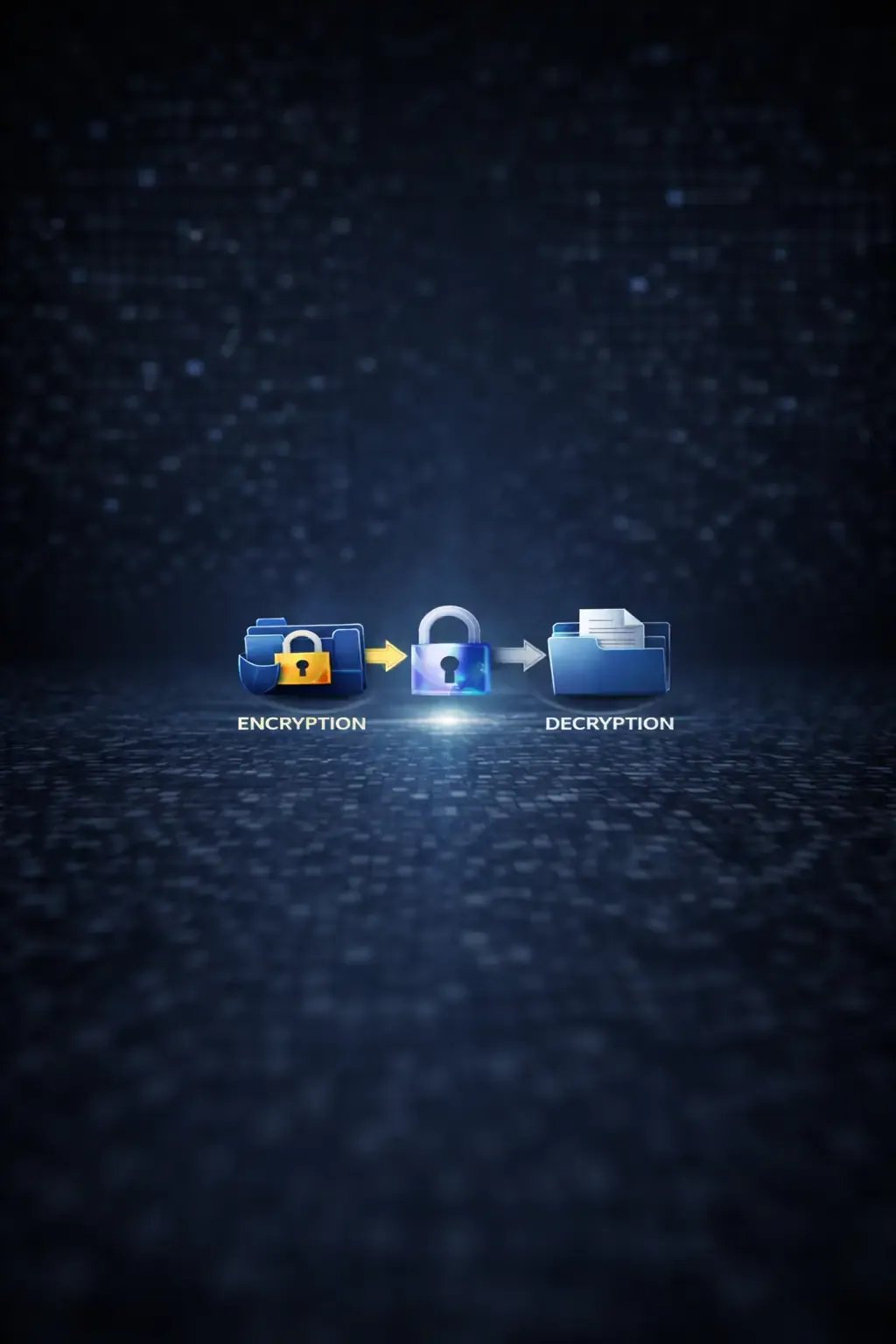
File Encryption and Decryption
Quantum-safe file protection.
QZT provides a post-quantum file encryption and decryption system designed to protect sensitive data even in untrusted environments. Files are encrypted at rest using symmetric encryption, while the encryption key is secured through post-quantum mechanisms based on ML-KEM (Kyber). By default, only the user who encrypted the file can decrypt it, ensuring strict confidentiality and full alignment with Zero Trust principles.

Certificates (PQC & Hybrid)
Future-proof digital identities.
QZT enables the generation, management, and verification of both post-quantum and hybrid digital certificates, combining classical cryptography with quantum-resistant algorithms. The platform supports self-signed certificates, certificate signing requests (CSRs), and user certificate issuance, allowing organizations to gradually adopt post-quantum PKI while maintaining compatibility with existing infrastructures.
Two-Factor Authentication
Quantum-resistant authentication.
QZT includes a quantum-resistant multi-factor authentication system based on OTP and QR codes. During registration, a post-quantum key pair is generated for the user and used to establish a secure shared secret. This approach ensures that both registration and login processes are protected by post-quantum cryptography, reinforcing the Zero Trust model from the very first access.


QR-HTTP
Quantum-safe APIs over HTTP.
QR-HTTP is a secure communication protocol developed within QZT to protect service-to-service traffic using post-quantum cryptography. Based on an authenticated key exchange (AKE) with ML-KEM and post-quantum signatures, it establishes encrypted channels over standard HTTP. This enables secure frontend–backend or service-to-service communications without requiring protocol redesigns.
Access Control
Zero Trust, enforced by cryptography.
Access control in QZT follows an explicit permission model aligned with Zero Trust principles. Every request is evaluated using post-quantum–signed tokens, and permissions are assigned granularly based on roles. Privileges are never implicit: access to encrypted resources must be explicitly granted, reducing attack surfaces and minimizing the risk of unauthorized access.


Key Management
Keys built for the quantum era.
QZT integrates key management services designed for post-quantum environments, covering secure key generation, encapsulation, and usage. Keys are managed independently from encrypted content and stored alongside access metadata, enabling auditing, scalability, and precise control over how cryptographic material is used within the system.
PQC-Generated Keys
Security beyond classical limits.
Cryptographic keys generated by QZT rely on standardized post-quantum algorithms and can be reinforced with quantum entropy. These keys are designed to remain secure in the long term against both classical and quantum adversaries, forming the foundation for encryption, authentication, and secure communications.